Obama Hasn’t Justified His Iraq Position
Michael Barone, politics guru extraordinaire, does more thorough studies of exit polls, reaching more intellectually competent conclusions, than anyone. He writes today, identifying adversarial “tribes” within the Democrat party.
“In state after state — from New Hampshire and Michigan to Texas and Ohio — Obama runs unusually strongly in counties with large universities. Academics — and I include here those who choose to live in university towns as well as those actually in or teaching school — seem to find Obama particularly appealing.
“Clinton’s highest percentages come in counties with large numbers of Latinos and what I call Jacksonians….
What’s behind these sharp divisions? You could sum it up by saying that Jacksonians are fighters and academics (and public employees) are not. Jacksonians fought fierce battles against Indians as they moved southwest; they have always made up a disproportionate share of the American military.
“…[Jacksonians] believe in natural liberty — I’ll leave you alone if you’ll leave me alone, but if you attack my family or my country, I’ll kill you. Academics are, to say the least, lightly represented in the American military, and in economic terms they tend to compete with the military for public dollars. They seek honor for the work of peace as fiercely as Jacksonians seek honor for the feats of war.
“Barack Obama notes again and again on the campaign trail that he spoke out against going to war in 2002 and calls for withdrawal from Iraq, though on terms that he leaves hazy and vague. This suits academics — and many journalists with similar mindsets — just fine. It’s in line with their portrayal of our soldiers as victims, not heroes, and their portrayal as heroes the academics (Obama used to teach at the University of Chicago Law School) who spoke out against the war.”
Barone concludes that the Nominee, Clinton or Obama, “may not be ablte to count on the losing candidate’s tribes in November.”
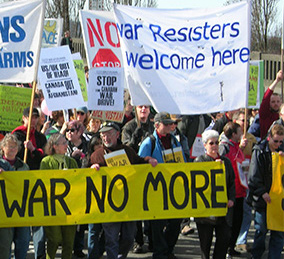 The attitudes of the academic/anti-war tribe are problematic not just for the Democrat party, but for the nation as a whole. Obama’s successful message taps directly into the obstinately simplistic and closed-minded attitude of the academic/anti-war left toward the Iraq operation: “I was against it, and I was right, and therefore we should abandon it now, without considering the consequences.”
A genuinely academic review would consider the potential benefit of America prevailing in the struggle for Iraq’s future: A friendly society with a consensual government in the Middle East, as a counterweight to Islamic radicalism; an ally in the war on terror.
A serious presidential candidate would not fall back on Obama’s shallow and naive declaration that he has the “best judgment,” only because he opposed replacing Saddam’s murderous regime with a democracy. He has never made the slightest attempt to explain how it would have been better to back down and let Saddam, and then his maniacal sons ran the place for several more decades.
Obama and his supporters can’t be bothered with the intellectual challenge of sincere, objective consideration of potential benefits, vs potential risks and costs. Instead they cite opinion polls to justify their position. But opinion polls favored the Iraq operation in the beginning. Before the invasion, Americans considered the potential risks of inaction and a majority thought those risks were too great.
Polling results have changed, not because it was morally wrong to depose Saddam, rescue the Iraqi people from oppression, and seek to launch a new democracy, but because WMDs weren’t found, it has taken a long time with many setbacks and the media have been relentlessly negative. Polling results are guaranteed to swing back to positive if the Iraq operation ultimately succeeds, the troops can come home victorious, and the free people of the new Iraq proudly stand their own.
Senator Obama has become the probable nominee with an emotional appeal to the anti-war left. His claim that he’s best for the job only because he opposed intervening in Iraq should require him to discuss the potential benefits, risks, and consequences of inaction. We voters have a duty to demand that he defend his implied, unstated assumption that inaction would been without risk or consequence. He must defend that assumption in light of a recently released, underreported investigation of documents captured from Saddam’s intelligence and espionage service, that provide ample evidence of Saddam’s connections with International terrorists.
